
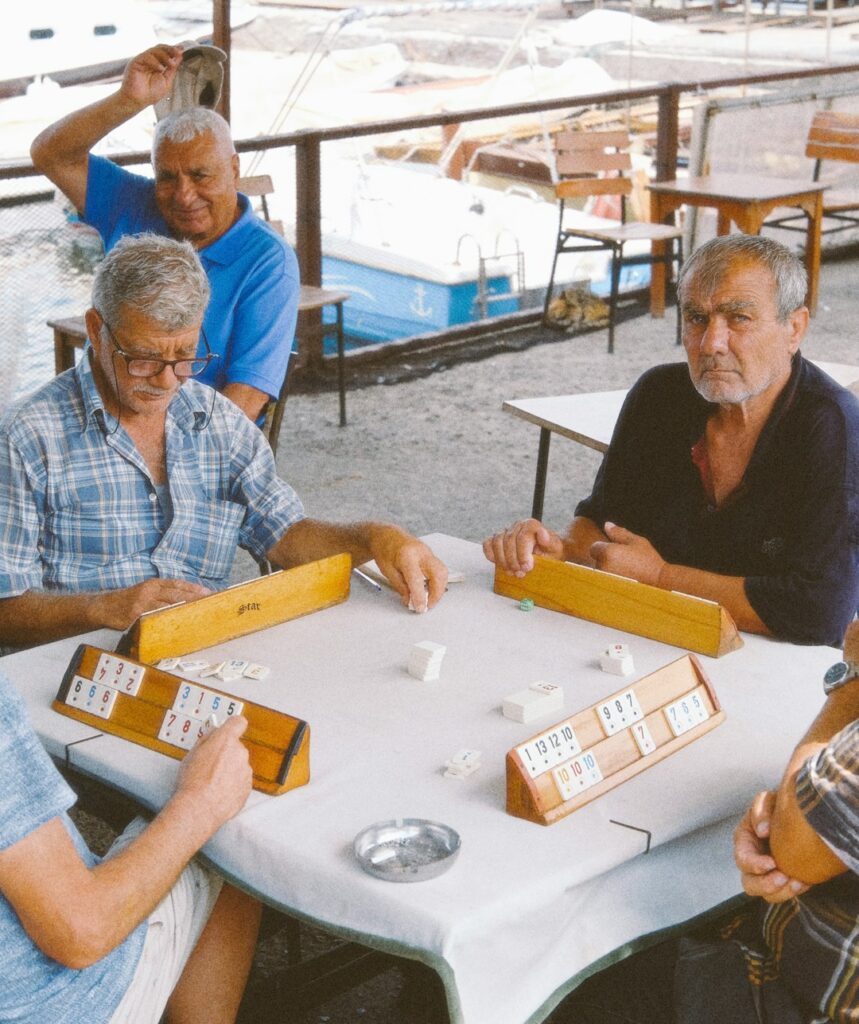
What games and pastimes are popular in assisted living?
Residents often enjoy activities that are familiar, social, flexible, and easy to adapt. Favorite choices include card games, bingo, puzzles, music, crafts, reading groups, trivia, and gentle indoor movement.
The most successful pastime is not necessarily the newest or most competitive. It is usually an activity that matches a person’s interests, energy level, vision, hearing, mobility, and comfort with groups. Some residents prefer lively gatherings, while others enjoy quiet activities at their own pace.
Common favorites include:
- Bingo, with larger cards and clearly marked numbers
- Checkers, dominoes, and simple board games
- Bridge, rummy, pinochle, or other familiar card games
- Word searches, crossword puzzles, and trivia
- Jigsaw puzzles with larger pieces
- Coloring, painting, knitting, and other crafts
- Listening to music or singing familiar songs
- Reading circles and discussions about current events
- Indoor walking, stretching, and seated exercise
- Gardening with containers, herbs, or seasonal plants
Activities can be offered in shared rooms, private apartments, outdoor areas, or quiet corners. In a dense community such as Darby, PA, indoor recreation can be especially useful during cold weather, heavy rain, humid summer days, or periods when walking outside is less comfortable.
Why do simple games remain so popular?
Simple games provide structure without making participation feel like work. They give residents a reason to gather, a clear way to begin, and natural opportunities for conversation.
Bingo, for example, is easy to understand and can be adjusted for different abilities. A group may use larger print, fewer cards, slower calling, or visual and verbal announcements. Trivia can focus on music, local history, television, food, sports, or memories from a particular generation.
Card games also encourage social connection. A resident who does not want to join a large group may feel more comfortable at a table with three or four players. Familiar rules can help people participate without having to learn a complicated new system.
Games should not be treated as tests of memory or intelligence. Winning may be enjoyable, but the larger benefits often come from conversation, shared laughter, mental stimulation, and a predictable social routine.
Which activities work well for residents with memory loss?
Activities for residents with memory loss usually work best when they are familiar, repetitive, sensory, and free from pressure. The purpose is participation and comfort rather than perfect performance.
Helpful options may include:
- Sorting cards by color or suit
- Matching large picture cards
- Folding towels or arranging safe craft materials
- Listening to well-known songs
- Looking through themed picture books
- Completing simple puzzles with a small number of pieces
- Rolling a soft ball back and forth
- Decorating cookies or assembling simple snacks
- Watering plants or arranging flowers
- Responding to conversation prompts about earlier life experiences
A person may not remember the name of a game but still enjoy handling pieces, hearing music, or sitting with others. Instructions should be brief and given one step at a time. Staff, family members, or other participants can demonstrate rather than explain every rule.
Correcting mistakes repeatedly can cause frustration. It is often better to change the activity, simplify the rules, or invite the resident to take a different role, such as dealing cards, choosing music, or keeping score with assistance.
How can games be adapted for vision, hearing, or mobility changes?
Most favorite pastimes can be made more accessible with small adjustments. Adaptation allows residents to keep participating in activities they already enjoy.
For vision changes, consider:
- Large-print cards, books, and game boards
- High-contrast colors
- Good lighting without glare
- Fewer objects on the table
- Tactile markers or raised labels
For hearing changes, reduce background noise and seat participants where faces are easy to see. Instructions should be spoken clearly, not shouted, and important information can also be written in large print.
For limited hand strength or arthritis, choose oversized playing cards, lightweight pieces, card holders, easy-grip craft tools, or games that do not require precise movements. A resident may enjoy being the question reader, music selector, or conversation leader if handling small objects is tiring.
Mobility limitations do not prevent meaningful recreation. Seated balloon volleyball, rhythm exercises, chair yoga, music programs, and table-based games can provide movement and social involvement without requiring long walks or standing.
Are competitive games appropriate in assisted living?
Competitive games can be enjoyable when the atmosphere remains friendly and optional. Some residents like keeping score, while others prefer cooperative activities where everyone works toward a shared goal.
Before starting a competitive game, participants should understand the rules and know that joining is voluntary. It may help to offer different levels of difficulty or allow residents to play in pairs. Games that eliminate players early can leave some people sitting without an activity, so group formats are often more inclusive.

Cooperative options include completing a large puzzle, answering trivia questions as a team, creating a shared art project, or working together on a seasonal decoration. These activities can reduce pressure while still providing a sense of accomplishment.
Staff and family members should watch for signs that a game is becoming stressful, such as arguments, withdrawal, repeated embarrassment, or visible fatigue. Changing the activity is a practical response, not a failure.
How often should residents participate in games and pastimes?
There is no single ideal schedule. Many residents benefit from a mixture of short daily activities and longer gatherings several times each week.
A balanced routine may include:
- A brief morning movement session
- A puzzle, reading period, or craft during the afternoon
- A card game or social gathering later in the day
- Music, conversation, or a quiet hobby in the evening
Activities should allow rest and flexibility. A resident may be interested in a game one day and too tired the next. Pain, medication effects, appointments, sleep quality, and mood can all influence participation.
Short sessions of 20 to 45 minutes may work better than long programs, particularly for residents who tire easily. The schedule should also include unstructured time. Recreation is more meaningful when residents can choose whether to join rather than feeling obligated to attend every event.
What should families bring or suggest?
Families can help by sharing information about past interests, not by assuming a favorite activity will remain unchanged. A former card player may now prefer music. Someone who enjoyed gardening may be more comfortable arranging small plants than working outdoors.
Useful details include:
- Favorite songs, performers, books, or television programs
- Former hobbies and occupations
- Games played with family members
- Foods, holidays, or traditions that encourage conversation
- Activities the resident dislikes or finds frustrating
- Vision, hearing, or hand-use concerns
A familiar deck of cards, photo album, large-print puzzle book, knitting project, or simple craft can support a meaningful visit. The activity should be easy to pause if conversation becomes more important.
How can residents choose the right pastime?
The right activity is one that feels enjoyable, manageable, and personally relevant. Residents can try several options and pay attention to whether the activity leaves them feeling energized, connected, calm, or accomplished.
It may help to ask:
- Do I prefer a group or a quiet individual activity?
- Do I enjoy competition, cooperation, or neither?
- Would I rather talk, create, move, listen, or solve problems?
- Is the activity comfortable for my eyes, hands, hearing, and energy level?
- Can the rules be simplified if needed?
- Can I leave or take a break without feeling embarrassed?
A well-planned recreation program makes room for many forms of participation. Watching a game, listening to music, helping arrange materials, or sharing a memory can be just as meaningful as playing every round.
